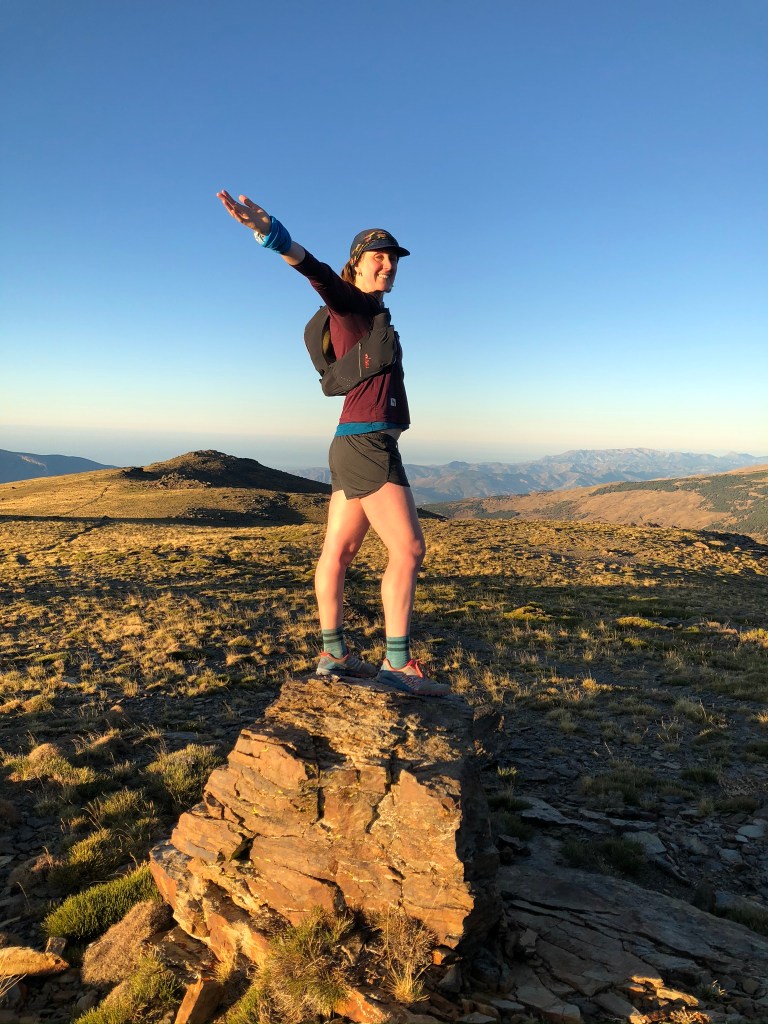
I love the benefits fitness and an active lifestyle have given me. I’m interested in optimising my training as a female, and all that comes with that. I’m not an outstanding athlete by any means, but I like to set ambitious goals and use my fitness a way to understand mastery. Also it lets me do cool shit like play in big mountains, hang out in nature and visit amazing places.
I live for adventures, conversations and connections. Through trail running, travelling and CrossFit I have crossed paths with some excellent people, and this has made my life immeasurably better. Being outside, in nature, in all its majesty, inspires me and makes me happier and better person.
I’m passionate about how we design cities and places, to enable healthy lifestyles and promote equality. Professionally, I’m interested in open space, sport and recreation, as well as accessibility and gender equity. I want to make a difference to how people (women and girls in particular) can find ways to move and be active, that improves their lives.
Some people I’ve learnt from
Leading researcher on sex differences and how hormones affect female performance
Brian Mackenzie & Kelly Starrett
Human Performance gurus
Who else….
Dr. Seuss
Places I play
More about me…a little bit of my backstory
As a teenager I never experienced bad PMS in the way some of my friends did, putting it down to being relatively active and a bit of luck. I’ve also never been forced to pay much attention to my period; pregnancy has never been on my cards. As I got a bit older (and maybe wiser…or at least more aware of my own mental state) I started paying a bit more attention to how I felt during PMS – I was irritable and lethargic, and a bit down on the world. I refused to let it affect my attitude to training, and certainly never considered if or how I should change anything in response. The CrossFit mentality of pushing your limits, finding that little bit extra, pain is just another feeling, etc etc was addictive and I was as strong and as fit as I’d ever been, and loved it. I thought I was tough enough to push through just about anything and after all, if pushing hard had gotten me this far, then pushing harder would make me even better…right?? (Note: more does not = better. Better = better. I’ve since learnt a lot more about checking my ego…)
My nutrition journey was also borne of my active lifestyle, and I started paying more attention, noticing how what I ate affected how I felt. Revolutionary, huh!? In my early 20s I was diagnosed with fructose malabsorption, so had mostly cut out bread, pasta, high fructose fruit, onions and a bunch of other seemingly random foods that surprisingly contain fructose or fructans. Almost immediately this took away the intense lethargy and gut issues I’d experienced on a daily basis. Through CrossFit I jumped on the paleo eating bandwagon, appreciating how much better I felt as a result of upping my vegetables and protein. And hot damn isn’t bacon good…
The changes I’d seen in myself through CrossFit had given me the confidence to consider the somewhat audacious goal of a marathon. During post race beers celebrating a half marathon, a plan was hatched. You can read about that time I ran the Paris marathon here.
For at least 6 months after my first marathon, running held very little appeal. I’d had enough of long slow solo slogs, but when my CrossFit box put on a running technique program by a professional running coach, I was interested again. I’d really enjoyed learning new skills through CrossFit (Olympic and power lifting techniques, gymnastics) and running technique seemed like a logical progression. This would prove to be one of the most influential decisions I’ve made. But more on that later.
On the nutrition front, I’d bought in to the ‘must consume a gel every 10k’ mantra as part of my marathon training – sometimes to stave off boredom more than anything, but as I got more into trail running, and considering an ultra trail event, I, like many others, realized this wasn’t sustainable. So I tried to follow a more ‘eating whole foods’ approach when I started running more and longer distances, but I struggled find food I could consume while moving which gave me enough energy without upsetting my guts (not an uncommon experience).
It was around this time that I started learning about fat adaptation and keto through podcasts by Tim Ferriss, Dom D’Agostino and others. It was certainly appealing to me; the principle is that instead of burning carbs as the primary fuel source (think throwing paper on to a fire – intense but short lived high) you teach your body to increasingly use fat as fuel. The benefits of this are that you carry a truckload of this fuel around, far more than you can store in carbs/ glycogen in your muscles, and while fat doesn’t fuel explosive activity (sprinting, lifting) it can be a slow and steady fuel source for longer, lower intensity activities (ie ultra running). Bingo – the answer!
I transitioned to low carb high fat, experimented with fasting, and keto. I found that I felt pretty good on LCHF, but did struggle with low energy at times. I distinctly remember doing 800m repeats at Olympic Park and, about half way through the first one, feeling like I had legs made of lead. While I did the other 7 reps, this would become a familiar feeling. No matter how much I foam rolled, got in the ice baths or stretched, it wouldn’t abate. I put it down to either not doing LCHF ‘right’, or being fatigued from lifting heavy and running. While there was definitely fatigue involved, it wasn’t until I added some starchy carbs from sweet potato in that I really felt any better (don’t worry, I can’t believe I didn’t do this earlier, either…)
I remained convinced LCHF was the answer nutrition wise; it seemed logical and I thought any issues I was experiencing meant I just wasn’t doing it right. I persevered, training a lot but recovering well, clocking up decent ks on the trails and time in the gym, completing a bunch of longer races and big adventures. After a particularly long and challenging day out at Surf Coast Century, I promised myself I would go back to speed work. It took 6 months, but finally nailing a 5k pb suggested I was doing something right.
Over the past year or so though, I struggled to shed a few kg, no matter how hard I trained, and how ‘well’ I ate. I had always tried to focus on what my body could do, rather than how it looked, and I’m damn proud of what I’ve accomplished. My motivation of losing weight was mainly so I’d be a faster runner and better athlete, but I can’t deny that vanity was part of it too. I had also started to experience much longer cycles – around 55 days. Between 21 and 35ish is considered normal, so I had a nagging feeling these were not unrelated.
I sought out the advice of a nutritionist who specialized in female hormones. Around the same time I came across Dr Stacy Sims and read her book Roar in a weekend. The book covers a huge amount about how sex differences affect training and nutrition. One of the principles that resonated with me was how women and men respond differently to keto and low carb protocols. From an evolutionary perspective, it’s beneficial for men to get lean when they eat less and fewer carbs – means they can efficiently go hunt and gather food. When there isn’t enough food around for women, it signals procreation would be a bad idea (so periods stop) and, anticipating the children and men will be fed first when food arrives, women begin to store fat. Yep, while we live in an age of plentiful (excess) food, this is still what happens, apparently. The energy in energy out principle is still important, but the type of energy is important…
There are also principles around female’s endocrine system needing carbs to function optimally.
I’m not an evolutionary biologist (or a biologist of any description, for that matter) but the implications of this for nutrition seemed pretty significant. So, without changing anything else, I got back on the starchy carbs, probably still only 150g a day, and this seemed to sort a few things out – my cycle returned to around 26 days. If this seems like the most obvious thing in the world, trust me, looking back I can’t really believe I didn’t realise this sooner, either. I also felt a lot better in training, being able to train at intensity in CrossFit again and continuing to build my speed back.
So there you have it. From getting in to CrossFit then long distance running, from gluten free to paleo to low carb, I’ve landed with ‘just eat real food’ and ‘don’t be that guy.’
 What Liz Learnt